
Captain Kidd — Pirate Captain Kidd, Captain William Kidd

near Plymouth Sound
The Pirates Own Book by Charles Ellms.
1837 Public Domain
Captain Kidd allegedly buried his family Bible near Plymouth Sound at Devon, England before his fated voyage. Kidd buried a large amount of his personal take on Gardiner’s Island, New York at the eastern end of Long Island. Out of his many years of privateering voyages, only one involved piracy, and that produced only one large haul of loot.
In this article: Life in New York / A Bad Deal / Turning Pirate
Captain William Kidd — Pirate Hunter Turned Pirate

18th century portrait by Sir James
Thornhill. Public Domain
Captain Kidd has the unfortunate distinction of being remembered more for his fate than his success as a pirate. He was born about 1645 in Scotland and likely spent his early years as a sailor. After coming to America as a young man, he had great success as a merchant and a privateer, and by his early 40’s, he was considered among the ranks of the elite — a friend of no less than Governor Benjamin Fletcher.
In 1689 while serving aboard a privateer in the Caribbean, he stole the ship, was elected captain, and named it Blessed William. Perhaps he wasn’t the best of company, for the crew quickly deserted him when they decided to turn pirate.

in New York City, 1691
Author unknown, Public Domain
Captain Kidd returned to New York and married a widow through whom he acquired valuable property in the heart of the city. His prestige increased after successful privateering raids off the coast during England’s war with France. By the mid-1690s he was a respected figure in colonial society — a man of property, a veteran mariner, and one of the few privateers trusted by both the merchant class and the colonial governors who depended on them. It was precisely that reputation that made him useful to powerful men with something to hide. Pirates in New England
A Bad Deal

of the Adventure Galley by Howard Pyle pre-1911, Public Domain
In 1695, he was in London seeking more privateering work but was talked into a questionable deal by the new Governor of New York and Massachusetts, Richard, Earl of Bellomont and fellow New Yorker Robert Livingston. Kidd was given command of the new 34-gun Adventure Galley, a letter of Marque to attack pirates and French East Indian Co. ships in the Eastern Seas, and a sketchy agreement to allow piracy on the side for extra income. Kidd protested any taint of piracy, but eventually gave in to the pressure and threats of the backers.
The arrangement was corrupt from its foundation. Bellomont and his partners — a syndicate that included some of the most powerful Whig lords in England — stood to profit handsomely from whatever Kidd seized. They held letters of marque that provided legal cover; Kidd held the wheel and would carry all the risk. The financial terms required Kidd to fund a significant share of the voyage himself, which he did by mortgaging his New York property. He had everything to lose and backers who had every incentive to sacrifice him if the political winds shifted.

1696, author unknown, Public Domain
Captain Kidd’s journey appeared doomed from the start. In May of 1696 while leaving London for New York to recruit more crew, he insulted two Royal Navy ships by not lowering his flags in respect, and his crew showed their backsides. The Adventure Galley was immediately boarded, and the best of the crew were taken off to serve elsewhere.
The Adventure Galley herself was a capable vessel — a 287-ton galley-frigate purpose-built for the mission, fitted with both sails and oars so she could maneuver in calm waters when sailing ships lay becalmed. Read more about the types of vessels Golden Age pirates favored on the Pirate Ship page. What Kidd lacked was not a good ship but a trustworthy crew. The men he was left with after the Navy impressment were drawn largely from the waterfront underclass of New York — men who had signed on for plunder, not pirate-hunting.
The Voyage of the Adventure Galley

1747, Public Domain
Kidd departed New York in September 1696 with around 150 men and made for the Indian Ocean — the hunting ground his commission specified. The route took him around the Cape of Good Hope and up toward Madagascar, the great resupply and refuge island for pirates operating in the Eastern Seas. The voyage was grueling. By the time he reached Madagascar, disease had killed roughly 50 of his crew. Supplies were critically low. The Adventure Galley herself was beginning to show her age in tropical waters, her hull fouled and her seams working.
Kidd spent months careening and reprovisioning, then moved north toward the Red Sea and the Bab-el-Mandeb strait — the choke point through which the Mughal treasure fleet passed each year. He was not the only one with this idea. The strait was frequented by every pirate operating the Pirate Round, and Kidd’s presence there would later be used against him as evidence of piratical intent. In reality, it was exactly where a legitimate pirate-hunter ought to have been looking. He never attacked the Mughal fleet. He did exchange fire with a Royal Navy escort vessel, which ended badly and added to his growing reputation as a rogue.
By mid-1697 the crew was restless and the voyage was yielding almost nothing. Kidd’s commission required him to take pirates and enemy French ships — but legitimate targets were scarce and well-armed. Two attempted captures failed. A small prize taken in the Laccadive Islands provided some relief but nothing close to what the backers expected or the crew demanded. The pressure on board was becoming impossible to contain.
Turning Pirate
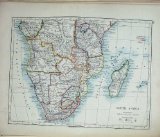
Summer was spent in New York gathering a crew of 150, which unfortunately was made of men who would sooner be pirate than privateer. After leaving in September, a journey of several months brought Kidd to Madagascar, and in this area he careened his ship, lost 50 crewmembers to disease, and ran low on supplies. By May, the pressure broke in upon him, and he forsook his mission, deciding to turn pirate instead of pirate hunter.
After two failed attempts at capture, he took a small prize before repairs in the Laccadive Islands. Late in 1697, a fight broke out as gunner William Moore accused Kidd of being evasive in two run-ins with heavily armed ships. The result of the argument was Kidd hitting Moore in the head when he threw a steel-banded bucket at him. Moore died of a skull fracture the next day.
The killing of William Moore was not the act of a cold-blooded captain — it was a moment of rage under extreme pressure — but it would hang Kidd as surely as anything else. Under Admiralty law, the death of a crew member at a captain’s hand was murder unless the captain could prove otherwise. Kidd had witnesses but no reliable allies. Moore’s accusation that Kidd was avoiding prizes reflected what many of the crew believed: that their captain lacked the nerve for outright piracy. The irony is that the one act of genuine violence Kidd committed was not piracy at all — it was a quarrel that got out of hand.
Things went from bad to worse in January 1698, when Captain Kidd lost all hope of pardon or redemption after being labeled a pirate by the East India Co. for taking of the heavily laden Quedah Merchant. The Quedah Merchant was the most significant prize of the entire voyage — an Armenian-owned vessel sailing under French passes, carrying a cargo of silk, sugar, iron, and saltpeter worth tens of thousands of pounds. Critically, the ship carried French passes that technically made her a legal prize under Kidd’s letter of marque. Kidd kept those passes. His prosecutors would later make them disappear.
The boarding and seizure of the Quedah Merchant was the kind of action Kidd’s commission was designed to legitimize — taking a ship sailing under French papers — yet in the political climate of 1698 it became the centerpiece of the case against him. After more lackluster results, he traded the rotting Adventure Galley for the Quedah, renamed Adventure Prize, and set course for the Caribbean.
Arrest, Trial and the Gallows

Gardiner's Island, New York
before 1911, Public Domain
Kidd made for the Caribbean hoping to negotiate a pardon, but word of his outlawry had preceded him. A stop in the Leewards made clear that no pardon was coming through official channels. Several crew members, learning that warrants had been issued, quietly slipped away. In hopes of attracting less attention, Kidd ran the Adventure Prize aground and transferred her cargo to a newly purchased sloop, the Antonio.
He then sailed north, stopping at Gardiner’s Island off the eastern tip of Long Island, where he buried a significant portion of his personal share of the Quedah Merchant’s cargo — gold dust, silver bars, jewels, and pieces of eight. The Gardiner family, who owned the island, later testified about the burial. That treasure was subsequently dug up on the orders of Lord Bellomont and used as evidence against him. Kidd also distributed goods to acquaintances in Boston and along the New England coast, perhaps hoping goodwill might substitute for the pardon his backers had promised.
Lord Bellomont strung him along with talk of clemency. Kidd arrived at Bellomont’s Boston offices expecting negotiation and was arrested on the spot. He was held for months in Boston before being shipped to England, spending over a year in Newgate Prison before his trial. The conditions were brutal and his health deteriorated badly.

Period engraving, c.1701. Public domain.
In March 1701, a series of swift Admiralty trials ensued. The French passes from the Quedah Merchant — his strongest legal defence — had vanished from the records. His Whig backers, now politically vulnerable themselves, wanted nothing to do with him. Kidd refused to turn state’s evidence against them. He was convicted of murder and five counts of piracy and hanged at Execution Dock, Wapping, on May 23, 1701. The rope broke on the first attempt. He was hanged a second time.
His body was tarred, fitted with iron bands, and suspended in a gibbet cage over the Thames at Tilbury Point, where it hung for three years as a warning to sailors who might contemplate piracy. It was a deliberately public spectacle — the kind of display the Admiralty used regularly to reinforce the cost of flying the black flag. The irony is that Kidd never flew one. By most careful readings of the evidence, he was a privateer pushed past his limits, abandoned by his backers, and made an example of by men who had more to answer for than he did.
The Treasure That Was Never Found

overseeing a treasure burial-Howard Pyle.
before 1911, Public domain.
The legend of Captain Kidd’s buried treasure has proven more durable than almost anything else from the Golden Age. The Gardiner’s Island cache was recovered and largely accounted for. But the fate of the rest of the Quedah Merchant’s cargo — and whatever Kidd may have concealed elsewhere — was never established to anyone’s satisfaction.
Treasure hunters have searched Gardiners Island, the coasts of Nova Scotia, the Bay of Fundy, the Caribbean, and several sites in Madagascar. In 2015, an American underwater archaeologist announced the recovery of a 50kg silver bar from a wreck site off Madagascar identified as the Adventure Prize — the renamed Quedah Merchant — though subsequent analysis by the Madagascan government suggested the bar was not from that wreck. The site remains contested.
What is not contested is that Kidd’s actual career as a pirate was brief and unremarkable. A handful of prizes, one major seizure, constant crew trouble, and a single violent incident that became a murder charge. Against that record stands a legend of buried millions that has been growing for more than three centuries. The legend, like most pirate legends, says more about what people want pirates to be than about what Captain Kidd actually was.
As both an Amazon and eBay Associate I earn from qualifying purchases.
All content ©2003– The Pirate's Realm unless otherwise noted. All rights reserved.